
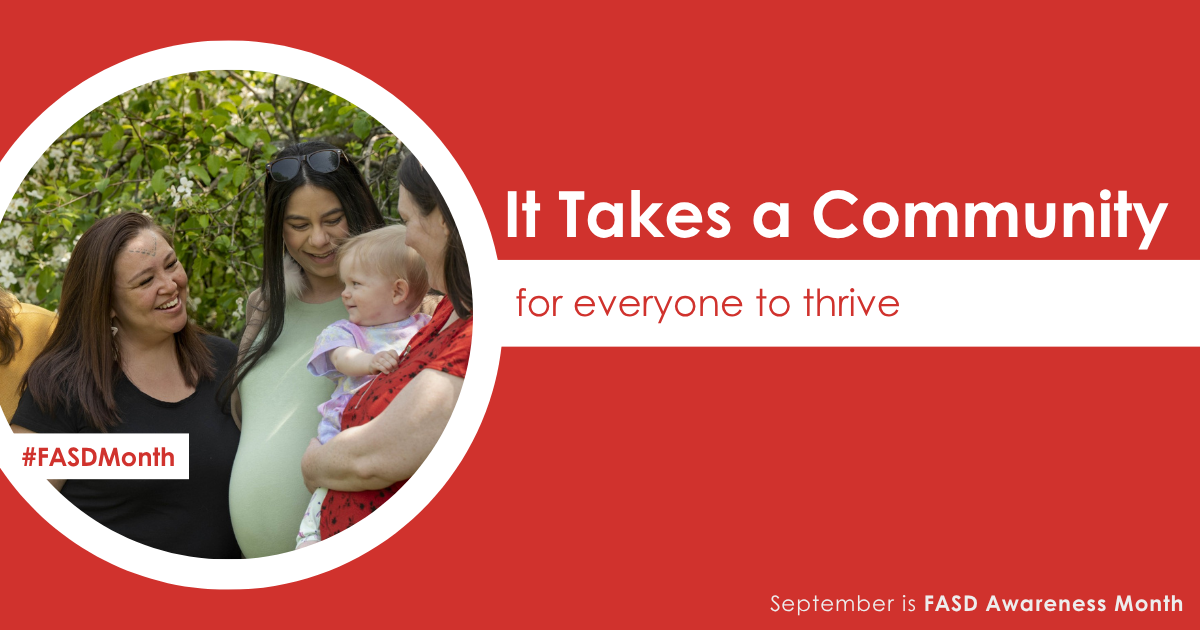
September 9 is Fetal Alcohol Spectrum Disorder Awareness Day. It is a time to learn about FASD, challenge harmful assumptions, and show greater understanding for people living with FASD and their families.
Fetal Alcohol Spectrum Disorder, or FASD, is a lifelong disability caused by exposure to alcohol before birth. It affects both the brain and body.
FASD can affect how a person learns, remembers information, manages emotions, communicates, plans, and completes everyday tasks. It affects each person differently. Every person with FASD has their own strengths, interests, challenges, and support needs.
FASD is also more common than many people realize. Researchers estimate that at least four per cent of Canadians—about one in every 25 people—have FASD. Many people are never diagnosed or may be diagnosed with something else.
Understanding What We See
FASD is often called an invisible disability because we cannot tell that someone has it simply by looking at them.
A child or youth may seem to understand an instruction but have trouble remembering it later. They may be able to complete a task one day but struggle with the same task the next. They may find it difficult to follow several steps, manage a change in routine, stay organized, or understand the results of their actions.
These challenges can sometimes be mistaken for poor behaviour, carelessness, or a lack of effort. But the child may be doing the best they can with the skills they have at that moment.
Instead of asking, “Why won’t this child do what is expected?” we can ask, “What is making this difficult, and how can we help?”
That small change in thinking can lead to more patience, less frustration, and better support.
Every Child Has Gifts
Children and youth with FASD have many strengths. They may be creative, caring, determined, friendly, helpful, artistic, musical, or good with animals. They may enjoy hands-on learning, trying new activities, or helping others.
Children and youth with FASD can learn and succeed. They may simply need information to be shared in a different way, more time to practise, or added support from the adults around them.
When we focus on strengths and create environments that fit a child’s needs, we help that child feel capable, included, and understood.
What Helpful Support Can Look Like
Small changes can make everyday life easier for a child or youth with FASD. Helpful approaches may include:
Keeping routines simple and predictable
Using pictures, calendars, checklists, or other visual reminders
Giving short, clear instructions
Breaking tasks into smaller steps
Allowing extra time to understand and respond
Giving advance notice before plans or activities change
Reducing noise, distractions, and overwhelm
Showing how to do something instead of only explaining it
Practising skills many times
Helping the child calm and manage strong emotions
Making sure the adults in the child’s life use similar approaches
These changes are not about lowering expectations. They give children and youth a fair chance to understand, learn, and experience success.

Kw’umut Lelum’s FASD Key Worker
Families do not have to figure everything out on their own.
Kw’umut Lelum’s FASD Key Worker, Seda Ozer, supports families of children and youth under age 19 who have confirmed or probable FASD. Support may also be available for children and youth with similar brain-based developmental needs.
Seda works alongside parents, family members, and caregivers to better understand each child’s strengths and needs. She can help families:
Learn more about FASD, assessment, and diagnosis
Create a support plan for their child or youth
Find helpful changes that can be made at home, at school, or in the community
Connect with appropriate programs and services
Follow up on referrals
Work with schools, assessment teams, and other service providers
Find useful information and practical resources
Build the skills and confidence to speak up for their child
Connect with parent or caregiver support opportunities
The goal is to strengthen the circle of care around the child while helping the whole family feel informed and supported.
Kw’umut Lelum’s FASD Key Worker services are available to eligible families in the Nanaimo–Ladysmith area.
Choosing Compassion Over Judgment
FASD awareness should always be grounded in compassion.
There are many reasons a person may use alcohol during pregnancy. These can include trauma, violence, mental-health challenges, substance dependence, poverty, unstable housing, or difficulty accessing health care and support. Shame and blame do not prevent FASD or help families heal.
The safest choice is not to drink alcohol during pregnancy or while planning a pregnancy. At the same time, people need accurate information, culturally safe services, and a welcoming place to ask for help without fear of judgment.
This September, Kw’umut Lelum invites everyone to learn more about FASD and listen to people with lived experience. By looking beyond behaviour, focusing on strengths, and responding with patience, we can help children, youth, and families feel understood and supported.
To learn more about Kw’umut Lelum’s FASD Key Worker or ask about support, please contact [insert contact or referral information].
More information is available from the Canada FASD Research Network and the Public Health Agency of Canada.